
The Mowachaht/Muchalaht First Nation is governed by the ḥaw̓iiḥ, hereditary leaders. The Council of Chiefs appoints the Salmon Parks Board of Directors and is responsible for ensuring MMFN law is upheld.
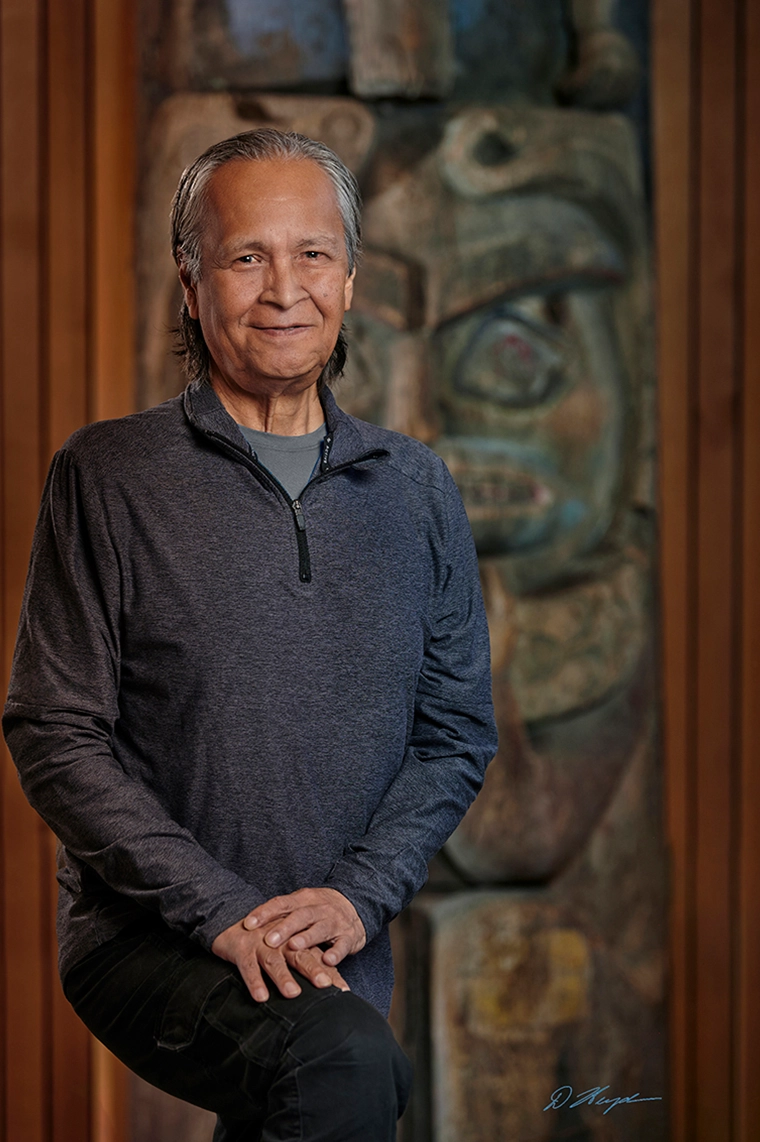

Tyee Ha’wiih Mike Maquinna was born in Esperanza in the winter of 1957. Mike’s early years were spent in Yuquot living with his family on their land and waters.
Mike has carried on the traditions and culture of Mowachaht/Muchalaht First Nation, following in the footsteps of his Father, tayiihawił (hereditary Chief) Ambrose Maquinna.
His vision for Salmon Parks is that Old Growth forest resiliency persists to the next generations in Mowachaht-Muchalaht ḥahuułi.
Tyee Ha’wiih Mike Maquinna was born in Esperanza in the winter of 1957. Mike’s early years were spent in Yuquot living with his family on their land and waters.
Mike has carried on the traditions and culture of Mowachaht/Muchalaht First Nation, following in the footsteps of his Father, tayiihawił (hereditary Chief) Ambrose Maquinna.
His vision for Salmon Parks is that Old Growth forest resiliency persists to the next generations in Mowachaht-Muchalaht ḥahuułi.
taayii ḥaw̓ił
Tyee Ha’wiih Mike Maquinna was born in Esperanza in the winter of 1957. Mike’s early years…
Tyee Ha’wiih Mike Maquinna was born in Esperanza in the winter of 1957. Mike’s early years were spent in Yuquot living with his family on their land and waters.
Mike has carried on the traditions and culture of Mowachaht/Muchalaht First Nation, following in the footsteps of his Father, tayiihawił (hereditary Chief) Ambrose Maquinna.
His vision for Salmon Parks is that Old Growth forest resiliency persists to the next generations in Mowachaht-Muchalaht ḥahuułi.
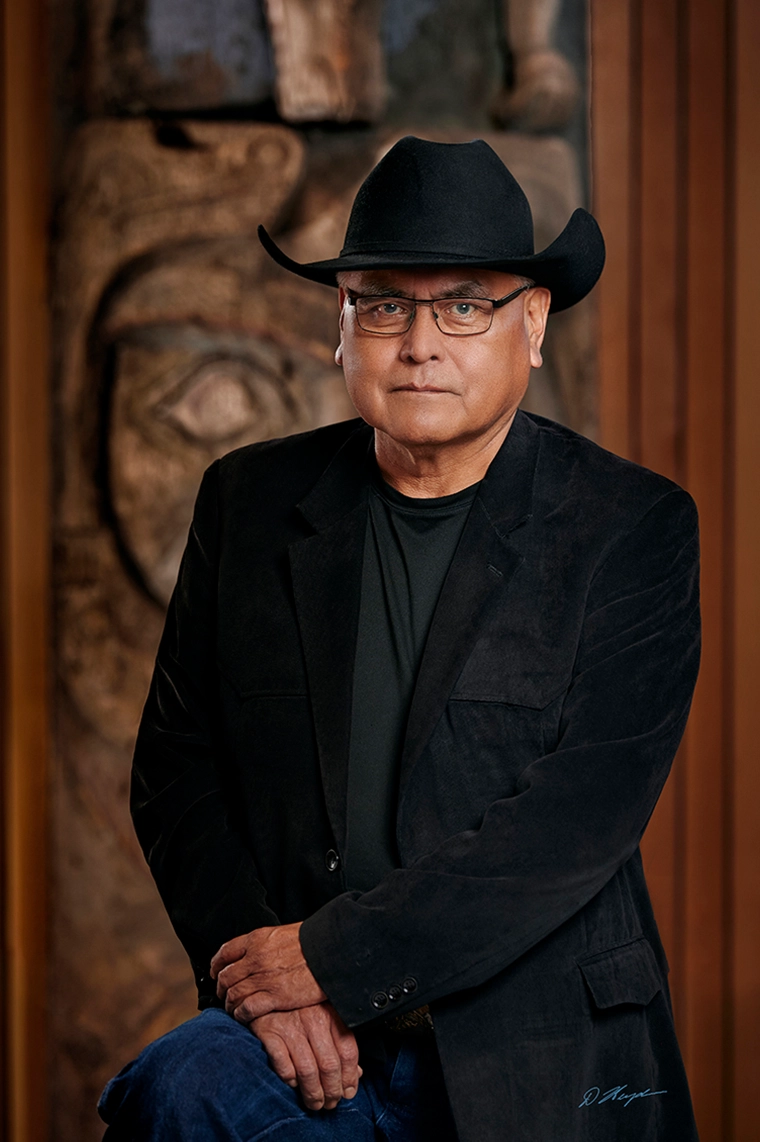
Chief Jerry Jack’s Nuu-chah-nulth name is ‘Klakwagiila’, and he comes from the House of Tsee-sah-aht. He is a Hereditary Chief from Mowachaht/Muchalaht First Nation. Chief Jack has over 40 years of experience working on First Nations issues including justice, policing, governance, fisheries and environmental management.
Chief Jack served 21 years of police service with the RCMP. He also served with the Quinault Tribal Police and Makah Tribal Police in Washington State. Chief Jack has been involved with various political organizations including the BCAFN, UBCIC and the First Nations Summit.
Chief Jack brings valuable insight to the Salmon Parks Stewardship Society on issues surrounding fisheries, forestry and Indigenous governance. Specifically, Chief Jack is very familiar with marine spill response processes, having acted as the lead for MMFN in Nootka Sound when a 60-year-old vessel began leaking oil. He worked on the ground collaborating with his community members, DFO and the Coast Guard to ensure that the environment and First Nations’ rights and responsibilities were respected, protected and supported.
Chief Jack continues to advocate for his community and asserts that the MMFN have been land stewards since time immemorial. Chief Jack lives in Gold River and can often be found in Campbell River, Nanaimo, or Friendly Cove on the west coast, monitoring his MMFN territorial waters.
Chief Jerry Jack’s Nuu-chah-nulth name is ‘Klakwagiila’, and he comes from the House of Tsee-sah-aht. He is a Hereditary Chief from Mowachaht/Muchalaht First Nation. Chief Jack has over 40 years of experience working on First Nations issues including justice, policing, governance, fisheries and environmental management.
Chief Jack served 21 years of police service with the RCMP. He also served with the Quinault Tribal Police and Makah Tribal Police in Washington State. Chief Jack has been involved with various political organizations including the BCAFN, UBCIC and the First Nations Summit.
Chief Jack brings valuable insight to the Salmon Parks Stewardship Society on issues surrounding fisheries, forestry and Indigenous governance. Specifically, Chief Jack is very familiar with marine spill response processes, having acted as the lead for MMFN in Nootka Sound when a 60-year-old vessel began leaking oil. He worked on the ground collaborating with his community members, DFO and the Coast Guard to ensure that the environment and First Nations’ rights and responsibilities were respected, protected and supported.
Chief Jack continues to advocate for his community and asserts that the MMFN have been land stewards since time immemorial. Chief Jack lives in Gold River and can often be found in Campbell River, Nanaimo, or Friendly Cove on the west coast, monitoring his MMFN territorial waters.
ḥaw̓ił
Chief Jerry Jack’s Nuu-chah-nulth name is ‘Klakwagiila’, and he comes from the House of…
Chief Jerry Jack’s Nuu-chah-nulth name is ‘Klakwagiila’, and he comes from the House of Tsee-sah-aht. He is a Hereditary Chief from Mowachaht/Muchalaht First Nation. Chief Jack has over 40 years of experience working on First Nations issues including justice, policing, governance, fisheries and environmental management.
Chief Jack served 21 years of police service with the RCMP. He also served with the Quinault Tribal Police and Makah Tribal Police in Washington State. Chief Jack has been involved with various political organizations including the BCAFN, UBCIC and the First Nations Summit.
Chief Jack brings valuable insight to the Salmon Parks Stewardship Society on issues surrounding fisheries, forestry and Indigenous governance. Specifically, Chief Jack is very familiar with marine spill response processes, having acted as the lead for MMFN in Nootka Sound when a 60-year-old vessel began leaking oil. He worked on the ground collaborating with his community members, DFO and the Coast Guard to ensure that the environment and First Nations’ rights and responsibilities were respected, protected and supported.
Chief Jack continues to advocate for his community and asserts that the MMFN have been land stewards since time immemorial. Chief Jack lives in Gold River and can often be found in Campbell River, Nanaimo, or Friendly Cove on the west coast, monitoring his MMFN territorial waters.
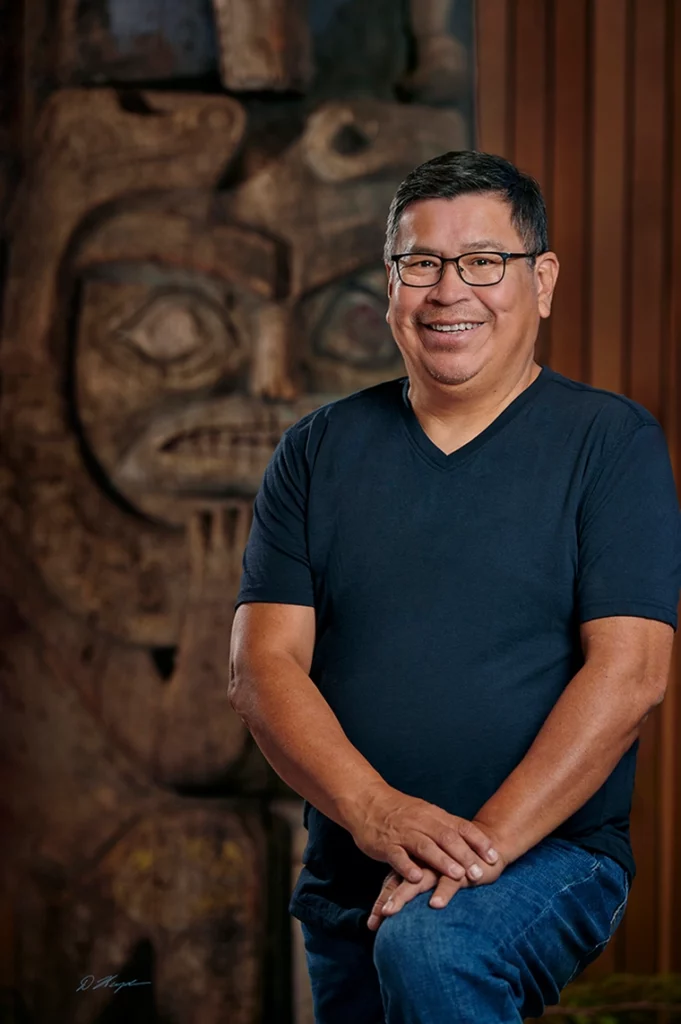
Dan Savey was born in Esperanza, B.C. to a father from Ehattesaht and a mother from Hesquiaht. Raised in Port Alberni, Dan has spent most of his life on Vancouver Island, where he learned to live from the land and sea. After shadowing his father for several years, Dan inherited the hereditary chieftain seat of the Mowachaht/Muchalaht First Nation and was formally seated as Chief in 2008.
A lifelong hunter and fisher, Dan has devoted more than 50 years to sustaining the Mowachaht/Muchalaht people’s connection to the territory. Having witnessed fish species being wiped out from the local waters, Dan continues to advocate for responsible harvesting, fisheries management, as well as issues important to the people, like community housing—issues he has championed as both a hereditary and council leader. His deep knowledge of the land and waters guides his vision for preserving the Nation’s resources and cultural practices for future generations.
Dan supports the goals of the Salmon Parks initiative and believes that Indigenous-led stewardship is essential to restoring balance to the environment. He speaks often about the importance of replenishing forests, protecting watersheds, and ensuring that resources are managed responsibly so that future generations can live well from the land.
Now semi-retired, Dan enjoys spending more time with his wife, children, and grandchildren—teaching them the same values of respect, hard work, and care for the land that he learned from his father.
Dan Savey was born in Esperanza, B.C. to a father from Ehattesaht and a mother from Hesquiaht. Raised in Port Alberni, Dan has spent most of his life on Vancouver Island, where he learned to live from the land and sea. After shadowing his father for several years, Dan inherited the hereditary chieftain seat of the Mowachaht/Muchalaht First Nation and was formally seated as Chief in 2008.
A lifelong hunter and fisher, Dan has devoted more than 50 years to sustaining the Mowachaht/Muchalaht people’s connection to the territory. Having witnessed fish species being wiped out from the local waters, Dan continues to advocate for responsible harvesting, fisheries management, as well as issues important to the people, like community housing — issues he has championed as both a hereditary and council leader.
Dan supports the goals of the Salmon Parks initiative and believes that Indigenous-led stewardship is essential to restoring balance to the environment. He speaks often about the importance of replenishing forests, protecting watersheds, and ensuring that resources are managed responsibly so that future generations can live well from the land.
Now semi-retired, Dan enjoys spending more time with his wife, children, and grandchildren — teaching them the same values of respect, hard work, and care for the land that he learned from his father.
ḥaw̓ił
Dan Savey was born in Esperanza, B.C. to a father from Ehattesaht and a mother from Hesquiaht…
Dan Savey was born in Esperanza, B.C. to a father from Ehattesaht and a mother from Hesquiaht. Raised in Port Alberni, Dan has spent most of his life on Vancouver Island, where he learned to live from the land and sea. After shadowing his father for several years, Dan inherited the hereditary chieftain seat of the Mowachaht/Muchalaht First Nation and was formally seated as Chief in 2008.
A lifelong hunter and fisher, Dan has devoted more than 50 years to sustaining the Mowachaht/Muchalaht people’s connection to the territory. Having witnessed fish species being wiped out from the local waters, Dan continues to advocate for responsible harvesting, fisheries management, as well as issues important to the people, like community housing — issues he has championed as both a hereditary and council leader.
Dan supports the goals of the Salmon Parks initiative and believes that Indigenous-led stewardship is essential to restoring balance to the environment. He speaks often about the importance of replenishing forests, protecting watersheds, and ensuring that resources are managed responsibly so that future generations can live well from the land.
Now semi-retired, Dan enjoys spending more time with his wife, children, and grandchildren — teaching them the same values of respect, hard work, and care for the land that he learned from his father.
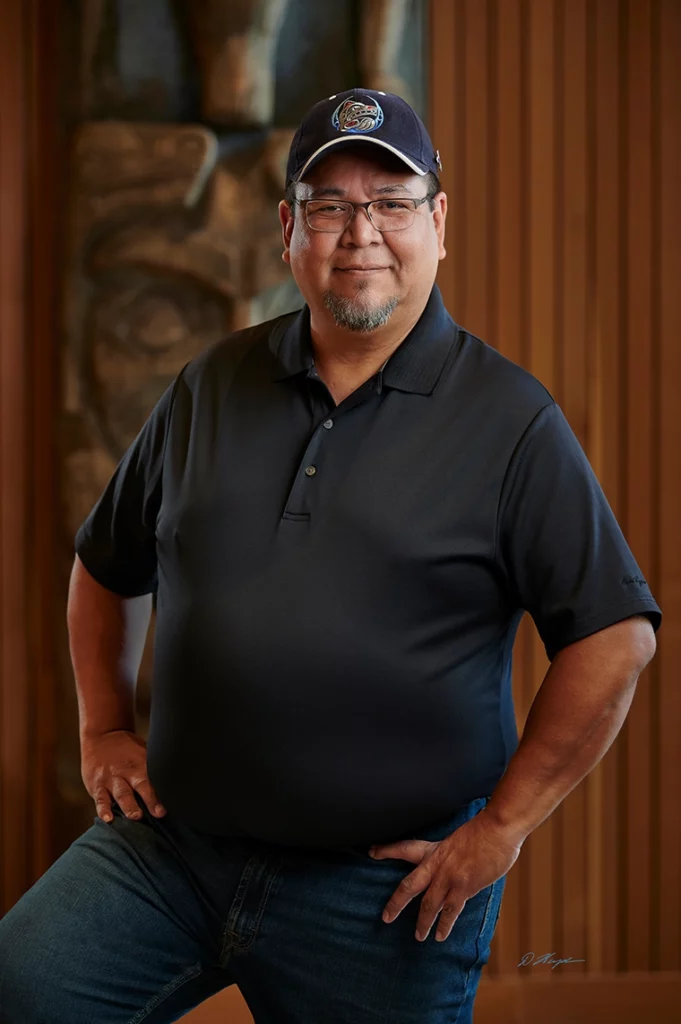
Nathan George was raised in Yuquot by his late parents – father from Ahousaht and mother from the Mowachaht/Muchalaht Nation. Nathan’s upbringing bridged both sides of his family. From a young age, he was taught by his uncles and cousins in the traditional ways—learning hunting, harvesting, and gathering from Elders and relatives across several communities. These teachings rooted him in respect for the land, water, and the diverse cultures within and beyond his own Nation.
Nathan speaks often about stewardship as a way of life, not just an idea. Having witnessed the changes brought by logging, erosion, and declining fish populations, he believes in restoring balance through collaboration, education, and cultural reconnection. As a member of the Salmon Parks Community Advisory Group, he shares his deep knowledge of the territories and advocates for sustainable forestry, salmon restoration, and renewed connection between people and place.
A lifelong resident of the territories, Nathan has worked in many community roles—from recreation and maintenance to fisheries and leadership. A father to two boys, Nathan’s approach to leadership is grounded in humility, inclusivity, and learning. Guided by his mother’s words: “Is that how you’d want someone to treat your sister?”, Nathan carries forward teachings of empathy and respect in all that he does.
Nathan George was raised in Yuquot by his late parents — a father from Ahousaht and a mother from the Mowachaht/Muchalaht Nation. Nathan’s upbringing bridged both sides of his family. From a young age, he was taught by his uncles and cousins in the traditional ways — learning hunting, harvesting, and gathering from Elders and relatives across several communities.
Nathan speaks often about stewardship as a way of life, not just an idea. Having witnessed the changes brought by logging, erosion, and declining fish populations, he believes in restoring balance through collaboration, education, and cultural reconnection. As a member of the Salmon Parks Community Advisory Group, he shares his deep knowledge of the territories and advocates for sustainable forestry, salmon restoration, and renewed connection between people and place.
A lifelong resident of the territories, Nathan has worked in many community roles — from recreation and maintenance to fisheries and leadership. A father to two boys, Nathan’s approach to leadership is grounded in humility, inclusivity, and learning. Guided by his mother’s words: “Is that how you’d want someone to treat your sister?”, Nathan carries forward teachings of empathy and respect in all that he does.
taayii ḥaw̓ił
Nathan George was raised in Yuquot by his late parents — a father from Ahousaht…
Nathan George was raised in Yuquot by his late parents — a father from Ahousaht and a mother from the Mowachaht/Muchalaht Nation. Nathan’s upbringing bridged both sides of his family. From a young age, he was taught by his uncles and cousins in the traditional ways — learning hunting, harvesting, and gathering from Elders and relatives across several communities.
Nathan speaks often about stewardship as a way of life, not just an idea. Having witnessed the changes brought by logging, erosion, and declining fish populations, he believes in restoring balance through collaboration, education, and cultural reconnection. As a member of the Salmon Parks Community Advisory Group, he shares his deep knowledge of the territories and advocates for sustainable forestry, salmon restoration, and renewed connection between people and place.
A lifelong resident of the territories, Nathan has worked in many community roles — from recreation and maintenance to fisheries and leadership. A father to two boys, Nathan’s approach to leadership is grounded in humility, inclusivity, and learning. Guided by his mother’s words: “Is that how you’d want someone to treat your sister?”, Nathan carries forward teachings of empathy and respect in all that he does.
The Board of Directors is the governing body for the Salmon Parks Stewardship Society
Tyee Ha’wiih Mike Maquinna was born in Esperanza in the winter of 1957. Mike’s early years were spent in Yuquot living with his family on their land and waters.
Mike has carried on the traditions and culture of Mowachaht/Muchalaht First Nation, following in the footsteps of his Father, tayiihawił (hereditary Chief) Ambrose Maquinna.
His vision for Salmon Parks is that Old Growth forest resiliency persists to the next generations in Mowachaht-Muchalaht ḥahuułi.
Tyee Ha’wiih Mike Maquinna was born in Esperanza in the winter of 1957. Mike’s early years were spent in Yuquot living with his family on their land and waters.
Mike has carried on the traditions and culture of Mowachaht/Muchalaht First Nation, following in the footsteps of his Father, tayiihawił (hereditary Chief) Ambrose Maquinna.
His vision for Salmon Parks is that Old Growth forest resiliency persists to the next generations in Mowachaht-Muchalaht ḥahuułi.
Director
Tyee Ha’wiih Mike Maquinna was born in Esperanza in the winter of 1957. Mike’s early years…
Tyee Ha’wiih Mike Maquinna was born in Esperanza in the winter of 1957. Mike’s early years were spent in Yuquot living with his family on their land and waters.
Mike has carried on the traditions and culture of Mowachaht/Muchalaht First Nation, following in the footsteps of his Father, tayiihawił (hereditary Chief) Ambrose Maquinna.
His vision for Salmon Parks is that Old Growth forest resiliency persists to the next generations in Mowachaht-Muchalaht ḥahuułi.
Chief Jerry Jack’s Nuu-chah-nulth name is ‘Klakwagiila’, and he comes from the House of Tsee-sah-aht. He is a Hereditary Chief from Mowachaht/Muchalaht First Nation. Chief Jack has over 40 years of experience working on First Nations issues including justice, policing, governance, fisheries and environmental management.
Chief Jack served 21 years of police service with the RCMP. He also served with the Quinault Tribal Police and Makah Tribal Police in Washington State. Chief Jack has been involved with various political organizations including the BCAFN, UBCIC and the First Nations Summit.
Chief Jack brings valuable insight to the Salmon Parks Stewardship Society on issues surrounding fisheries, forestry and Indigenous governance. Specifically, Chief Jack is very familiar with marine spill response processes, having acted as the lead for MMFN in Nootka Sound when a 60-year-old vessel began leaking oil. He worked on the ground collaborating with his community members, DFO and the Coast Guard to ensure that the environment and First Nations’ rights and responsibilities were respected, protected and supported.
Chief Jack continues to advocate for his community and asserts that the MMFN have been land stewards since time immemorial. Chief Jack lives in Gold River and can often be found in Campbell River, Nanaimo, or Friendly Cove on the west coast, monitoring his MMFN territorial waters.
Chief Jerry Jack’s Nuu-chah-nulth name is ‘Klakwagiila’, and he comes from the House of Tsee-sah-aht. He is a Hereditary Chief from Mowachaht/Muchalaht First Nation. Chief Jack has over 40 years of experience working on First Nations issues including justice, policing, governance, fisheries and environmental management.
Chief Jack served 21 years of police service with the RCMP. He also served with the Quinault Tribal Police and Makah Tribal Police in Washington State. Chief Jack has been involved with various political organizations including the BCAFN, UBCIC and the First Nations Summit.
Chief Jack brings valuable insight to the Salmon Parks Stewardship Society on issues surrounding fisheries, forestry and Indigenous governance. Specifically, Chief Jack is very familiar with marine spill response processes, having acted as the lead for MMFN in Nootka Sound when a 60-year-old vessel began leaking oil. He worked on the ground collaborating with his community members, DFO and the Coast Guard to ensure that the environment and First Nations’ rights and responsibilities were respected, protected and supported.
Chief Jack continues to advocate for his community and asserts that the MMFN have been land stewards since time immemorial. Chief Jack lives in Gold River and can often be found in Campbell River, Nanaimo, or Friendly Cove on the west coast, monitoring his MMFN territorial waters.
Director
Chief Jerry Jack’s Nuu-chah-nulth name is ‘Klakwagiila’, and he comes from the House of…
Chief Jerry Jack’s Nuu-chah-nulth name is ‘Klakwagiila’, and he comes from the House of Tsee-sah-aht. He is a Hereditary Chief from Mowachaht/Muchalaht First Nation. Chief Jack has over 40 years of experience working on First Nations issues including justice, policing, governance, fisheries and environmental management.
Chief Jack served 21 years of police service with the RCMP. He also served with the Quinault Tribal Police and Makah Tribal Police in Washington State. Chief Jack has been involved with various political organizations including the BCAFN, UBCIC and the First Nations Summit.
Chief Jack brings valuable insight to the Salmon Parks Stewardship Society on issues surrounding fisheries, forestry and Indigenous governance. Specifically, Chief Jack is very familiar with marine spill response processes, having acted as the lead for MMFN in Nootka Sound when a 60-year-old vessel began leaking oil. He worked on the ground collaborating with his community members, DFO and the Coast Guard to ensure that the environment and First Nations’ rights and responsibilities were respected, protected and supported.
Chief Jack continues to advocate for his community and asserts that the MMFN have been land stewards since time immemorial. Chief Jack lives in Gold River and can often be found in Campbell River, Nanaimo, or Friendly Cove on the west coast, monitoring his MMFN territorial waters.

Azar brings over 15 years of experience as a Chief Executive Officer within First Nation governance and business environments. He has served as the most senior civil servant and executive within First Nations administration, acting as liaison between the law-making and administrative branches of government and reporting directly to First Nations leadership, while coordinating the delivery of federally and provincially funded programs and services across all First Nation departments and entities.
He also has significant for-profit leadership experience spanning a portfolio of First Nation-managed businesses, including forestry, tourism, hotel management, fisheries, real estate, pharmaceuticals, insurance, oil and gas, automotive, fast-food service, bio-energy, over 20,000 acres of farm, ranch and sub-division development, and Indigenous arts and crafts.
Azar’s leadership experience includes managing operations of over 350 employees across Alberta and British Columbia. His educational background includes a Master of Business Administration (MBA), an Advanced Graduate Diploma in Management, a Bachelor of Civil Engineering, and additional training in managerial economics and ISO 9001:2000 Internal Audit.
As the Band Administrator/Chief Executive Officer for Mowachaht/Muchalaht First Nation, Azar provides a critical link between the Nation’s operations in the stewardship of lands and waters with the goals of the Hereditary Chiefs being pursued through the work of the Salmon Parks Stewardship Society.
Azar brings over 15 years of experience as a Chief Executive Officer within First Nation governance and business environments. He has served as the most senior civil servant and executive within First Nations administration, acting as liaison between the law-making and administrative branches of government and reporting directly to First Nations leadership, while coordinating the delivery of federally and provincially funded programs and services across all First Nation departments and entities.
He also has significant for-profit leadership experience spanning a portfolio of First Nation-managed businesses, including forestry, tourism, hotel management, fisheries, real estate, pharmaceuticals, insurance, oil and gas, automotive, fast-food service, bio-energy, over 20,000 acres of farm, ranch and sub-division development, and Indigenous arts and crafts.
Azar’s leadership experience includes managing operations of over 350 employees across Alberta and British Columbia. His educational background includes a Master of Business Administration (MBA), an Advanced Graduate Diploma in Management, a Bachelor of Civil Engineering, and additional training in managerial economics and ISO 9001:2000 Internal Audit.
As the Band Administrator/Chief Executive Officer for Mowachaht/Muchalaht First Nation, Azar provides a critical link between the Nation’s operations in the stewardship of lands and waters with the goals of the Hereditary Chiefs being pursued through the work of the Salmon Parks Stewardship Society.
Board Chair
Azar brings over 15 years of experience as a Chief Executive Officer within First Nation…
Azar brings over 15 years of experience as a Chief Executive Officer within First Nation governance and business environments. He has served as the most senior civil servant and executive within First Nations administration, acting as liaison between the law-making and administrative branches of government and reporting directly to First Nations leadership, while coordinating the delivery of federally and provincially funded programs and services across all First Nation departments and entities.
He also has significant for-profit leadership experience spanning a portfolio of First Nation-managed businesses, including forestry, tourism, hotel management, fisheries, real estate, pharmaceuticals, insurance, oil and gas, automotive, fast-food service, bio-energy, over 20,000 acres of farm, ranch and sub-division development, and Indigenous arts and crafts.
Azar’s leadership experience includes managing operations of over 350 employees across Alberta and British Columbia. His educational background includes a Master of Business Administration (MBA), an Advanced Graduate Diploma in Management, a Bachelor of Civil Engineering, and additional training in managerial economics and ISO 9001:2000 Internal Audit.
As the Band Administrator/Chief Executive Officer for Mowachaht/Muchalaht First Nation, Azar provides a critical link between the Nation’s operations in the stewardship of lands and waters with the goals of the Hereditary Chiefs being pursued through the work of the Salmon Parks Stewardship Society.
Like the generations before him, Larry Andrews was born in the Nootka Sound area in the traditional territory of the Mowachaht/Muchalaht First Nation. The Nuu-chah-nulth name given to him at birth was ‘Yawah’ and translates to ‘where the winds blow.’
Larry’s first connection to the marine environment was aboard his father’s fishing boat, and he has fond memories of a young childhood spent exploring the forests and oceans around Nootka Sound. After spending his youth in Seattle, he returned to his home territory, married the love of his life and started a family and employment at the Tahsis sawmill.
Larry’s successful career in forestry spanned four decades, concluding with his management position as Native Liaison for Pacific Forest Products. For over 20 years, Larry served on the Nootka Sound Resource Board and on the Council of Chiefs of the Mowachaht/Muchalaht First Nation. In addition to his board role with the Salmon Parks Stewardship Society, Larry also serves on the boards of Matchlee Forestry and Nis’maas Economic Development.
Larry continues to be very active in the community of Gold River. Advocating for his nation and rooted in the beliefs of coexistence and cooperation, Larry hopes that everyone who cherishes Nootka Sound can benefit from their time spent in the ancestral home of the Mowachaht/Muchalaht First Nation.
Like the generations before him, Larry Andrews was born in the Nootka Sound area in the traditional territory of the Mowachaht/Muchalaht First Nation. The Nuu-chah-nulth name given to him at birth was ‘Yawah’ and translates to ‘where the winds blow.’
Larry’s first connection to the marine environment was aboard his father’s fishing boat, and he has fond memories of a young childhood spent exploring the forests and oceans around Nootka Sound. After spending his youth in Seattle, he returned to his home territory, married the love of his life and started a family and employment at the Tahsis sawmill.
Larry’s successful career in forestry spanned four decades, concluding with his management position as Native Liaison for Pacific Forest Products. For over 20 years, Larry served on the Nootka Sound Resource Board and on the Council of Chiefs of the Mowachaht/Muchalaht First Nation. In addition to his board role with the Salmon Parks Stewardship Society, Larry also serves on the boards of Matchlee Forestry and Nis’maas Economic Development.
Larry continues to be very active in the community of Gold River. Advocating for his nation and rooted in the beliefs of coexistence and cooperation, Larry hopes that everyone who cherishes Nootka Sound can benefit from their time spent in the ancestral home of the Mowachaht/Muchalaht First Nation.
Director
Like the generations before him, Larry Andrews was born in Nootka Sound area in the…
Like the generations before him, Larry Andrews was born in the Nootka Sound area in the traditional territory of the Mowachaht/Muchalaht First Nation. The Nuu-chah-nulth name given to him at birth was ‘Yawah’ and translates to ‘where the winds blow.’
Larry’s first connection to the marine environment was aboard his father’s fishing boat, and he has fond memories of a young childhood spent exploring the forests and oceans around Nootka Sound. After spending his youth in Seattle, he returned to his home territory, married the love of his life and started a family and employment at the Tahsis sawmill.
Larry’s successful career in forestry spanned four decades, concluding with his management position as Native Liaison for Pacific Forest Products. For over 20 years, Larry served on the Nootka Sound Resource Board and on the Council of Chiefs of the Mowachaht/Muchalaht First Nation. In addition to his board role with the Salmon Parks Stewardship Society, Larry also serves on the boards of Matchlee Forestry and Nis’maas Economic Development.
Larry continues to be very active in the community of Gold River. Advocating for his nation and rooted in the beliefs of coexistence and cooperation, Larry hopes that everyone who cherishes Nootka Sound can benefit from their time spent in the ancestral home of the Mowachaht/Muchalaht First Nation.
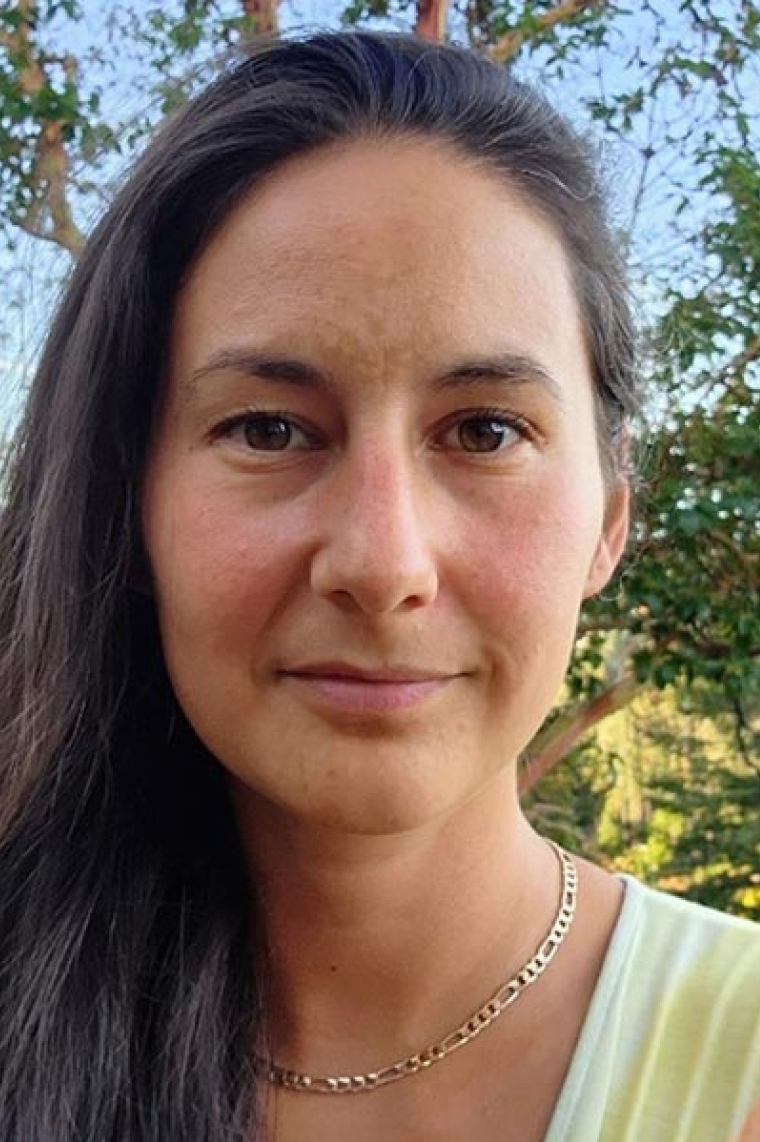
Dr. Tara Atleo, haḥuuła, is a stewardship economics researcher and Indigenous sustainable development practitioner from the Ahousaht First Nation, house of ƛaqišpiił. She is an Assistant Professor in the Faculty of Forestry and Environmental Stewardship at the University of British Columbia, where she leads the Stewardship Economics Lab and teaches business and finance in the Bachelor of Indigenous Land Stewardship program.
Grounded in Ahousaht legal principles, Tara’s research asks how Indigenous law and governance change the way we think about economics and use economic tools. Her work centres on values across economic valuation, sustainable development, land use planning, and the role of Indigenous languages in decision-making.
Tara has over 15 years of experience working with communities, from business management and implementation to policy and government-to-government partnership support. In her former role as CEO of the Maaqutusiis Hahoulthee Stewardship Society, she led the redevelopment of Ahousaht’s stewardship guardian program and the establishment of Ahousaht-led park operations within the territories, including at Nism̓aakqin Park, formerly known as Maquinna Marine Park.
She holds a PhD from the University of Waterloo, an MSc in Environmental Economics from SOAS University of London, and a BBA with a concentration in economics from Vancouver Island University.
Dr. Tara Atleo, haḥuuła, is a stewardship economics researcher and Indigenous sustainable development practitioner from the Ahousaht First Nation, house of ƛaqišpiił. She is an Assistant Professor in the Faculty of Forestry and Environmental Stewardship at the University of British Columbia, where she leads the Stewardship Economics Lab and teaches business and finance in the Bachelor of Indigenous Land Stewardship program.
Grounded in Ahousaht legal principles, Tara’s research asks how Indigenous law and governance change the way we think about economics and use economic tools. Her work centres on values across economic valuation, sustainable development, land use planning, and the role of Indigenous languages in decision-making.
Tara has over 15 years of experience working with communities, from business management and implementation to policy and government-to-government partnership support. In her former role as CEO of the Maaqutusiis Hahoulthee Stewardship Society, she led the redevelopment of Ahousaht’s stewardship guardian program and the establishment of Ahousaht-led park operations within the territories, including at Nism̓aakqin Park, formerly known as Maquinna Marine Park.
She holds a PhD from the University of Waterloo, an MSc in Environmental Economics from SOAS University of London, and a BBA with a concentration in economics from Vancouver Island University.
Director
Dr. Tara Atleo, haḥuuła, is a stewardship economics researcher and Indigenous…
Dr. Tara Atleo, haḥuuła, is a stewardship economics researcher and Indigenous sustainable development practitioner from the Ahousaht First Nation, house of ƛaqišpiił. She is an Assistant Professor in the Faculty of Forestry and Environmental Stewardship at the University of British Columbia, where she leads the Stewardship Economics Lab and teaches business and finance in the Bachelor of Indigenous Land Stewardship program.
Grounded in Ahousaht legal principles, Tara’s research asks how Indigenous law and governance change the way we think about economics and use economic tools. Her work centres on values across economic valuation, sustainable development, land use planning, and the role of Indigenous languages in decision-making.
Tara has over 15 years of experience working with communities, from business management and implementation to policy and government-to-government partnership support. In her former role as CEO of the Maaqutusiis Hahoulthee Stewardship Society, she led the redevelopment of Ahousaht’s stewardship guardian program and the establishment of Ahousaht-led park operations within the territories, including at Nism̓aakqin Park, formerly known as Maquinna Marine Park.
She holds a PhD from the University of Waterloo, an MSc in Environmental Economics from SOAS University of London, and a BBA with a concentration in economics from Vancouver Island University.
George Hanson is the Managing Partner of Clayton Consulting and has been a resident of Vancouver Island for over three decades.
Mr. Hanson has consulted for corporations, community organizations, and district, municipal, provincial and federal governments. As President & CEO of the Vancouver Island Economic Alliance (2011–2022), George oversaw production of the annual ‘State of the Island’ Economic Summit, the annual ‘State of the Island’ Economic Report, the ‘Island Good’ product brand, and the Foreign Trade Zone designation for Vancouver Island (FTZVI). He served as President of the Business Improvement Areas of British Columbia, as Chair of the Nanaimo Foundation, on the Advisory Committee for the Centre for Seafood Innovation at Vancouver Island University, and as a founding director of the Pacific Seaweed Industry Association. George currently serves as a Director on the Nanaimo Airport Commission.
George has a reputation for getting things done and making a difference. His strong experience in community, economic and organizational development has been invaluable to the growth of the Salmon Parks Stewardship Society.
In addition to his board role with Salmon Parks, George is Chair of the Nis’maas Development Corporation, the economic development initiative managed by the Mowachaht/Muchalaht First Nation.
George Hanson is the Managing Partner of Clayton Consulting and has been a resident of Vancouver Island for over three decades.
Mr. Hanson has consulted for corporations, community organizations, and district, municipal, provincial and federal governments. As President & CEO of the Vancouver Island Economic Alliance (2011–2022), George oversaw production of the annual ‘State of the Island’ Economic Summit, the annual ‘State of the Island’ Economic Report, the ‘Island Good’ product brand, and the Foreign Trade Zone designation for Vancouver Island (FTZVI). He served as President of the Business Improvement Areas of British Columbia, as Chair of the Nanaimo Foundation, on the Advisory Committee for the Centre for Seafood Innovation at Vancouver Island University, and as a founding director of the Pacific Seaweed Industry Association. George currently serves as a Director on the Nanaimo Airport Commission.
George has a reputation for getting things done and making a difference. His strong experience in community, economic and organizational development has been invaluable to the growth of the Salmon Parks Stewardship Society.
In addition to his board role with Salmon Parks, George is Chair of the Nis’maas Development Corporation, the economic development initiative managed by the Mowachaht/Muchalaht First Nation.
Director
George Hanson is the Managing Partner of Clayton Consulting and has been a resident…
George Hanson is the Managing Partner of Clayton Consulting and has been a resident of Vancouver Island for over three decades.
Mr. Hanson has consulted for corporations, community organizations, and district, municipal, provincial and federal governments. As President & CEO of the Vancouver Island Economic Alliance (2011–2022), George oversaw production of the annual ‘State of the Island’ Economic Summit, the annual ‘State of the Island’ Economic Report, the ‘Island Good’ product brand, and the Foreign Trade Zone designation for Vancouver Island (FTZVI). He served as President of the Business Improvement Areas of British Columbia, as Chair of the Nanaimo Foundation, on the Advisory Committee for the Centre for Seafood Innovation at Vancouver Island University, and as a founding director of the Pacific Seaweed Industry Association. George currently serves as a Director on the Nanaimo Airport Commission.
George has a reputation for getting things done and making a difference. His strong experience in community, economic and organizational development has been invaluable to the growth of the Salmon Parks Stewardship Society.
In addition to his board role with Salmon Parks, George is Chair of the Nis’maas Development Corporation, the economic development initiative managed by the Mowachaht/Muchalaht First Nation.
Matt Christensen (M.Sc., RPBio, PAg) brings over a decade of executive non-profit board governance and regional conservation leadership. Professionally, he leads provincial conservation delivery as the Manager of Provincial Operations for Ducks Unlimited Canada in British Columbia.
A dual-certified Registered Professional Biologist and Registered Professional Agrologist, Matt holds a B.Sc. in Conservation Biology (University of Alberta) and an M.Sc. in Zoology (UBC). Combining scientific rigour with proven board governance, he actively champions conservation initiatives that honour First Nations’ inherent rights, authority, and knowledge systems.
Matt Christensen (M.Sc., RPBio, PAg) brings over a decade of executive non-profit board governance and regional conservation leadership. Professionally, he leads provincial conservation delivery as the Manager of Provincial Operations for Ducks Unlimited Canada in British Columbia.
A dual-certified Registered Professional Biologist and Registered Professional Agrologist, Matt holds a B.Sc. in Conservation Biology (University of Alberta) and an M.Sc. in Zoology (UBC). Combining scientific rigour with proven board governance, he actively champions conservation initiatives that honour First Nations’ inherent rights, authority, and knowledge systems.
Director
Matt Christensen (M.Sc., RPBio, PAg) brings over a decade of executive non-profit board…
Matt Christensen (M.Sc., RPBio, PAg) brings over a decade of executive non-profit board governance and regional conservation leadership. Professionally, he leads provincial conservation delivery as the Manager of Provincial Operations for Ducks Unlimited Canada in British Columbia.
A dual-certified Registered Professional Biologist and Registered Professional Agrologist, Matt holds a B.Sc. in Conservation Biology (University of Alberta) and an M.Sc. in Zoology (UBC). Combining scientific rigour with proven board governance, he actively champions conservation initiatives that honour First Nations’ inherent rights, authority, and knowledge systems.
Program staff carry out day-to-day operations and programming across all of Salmon Parks’ priorities.
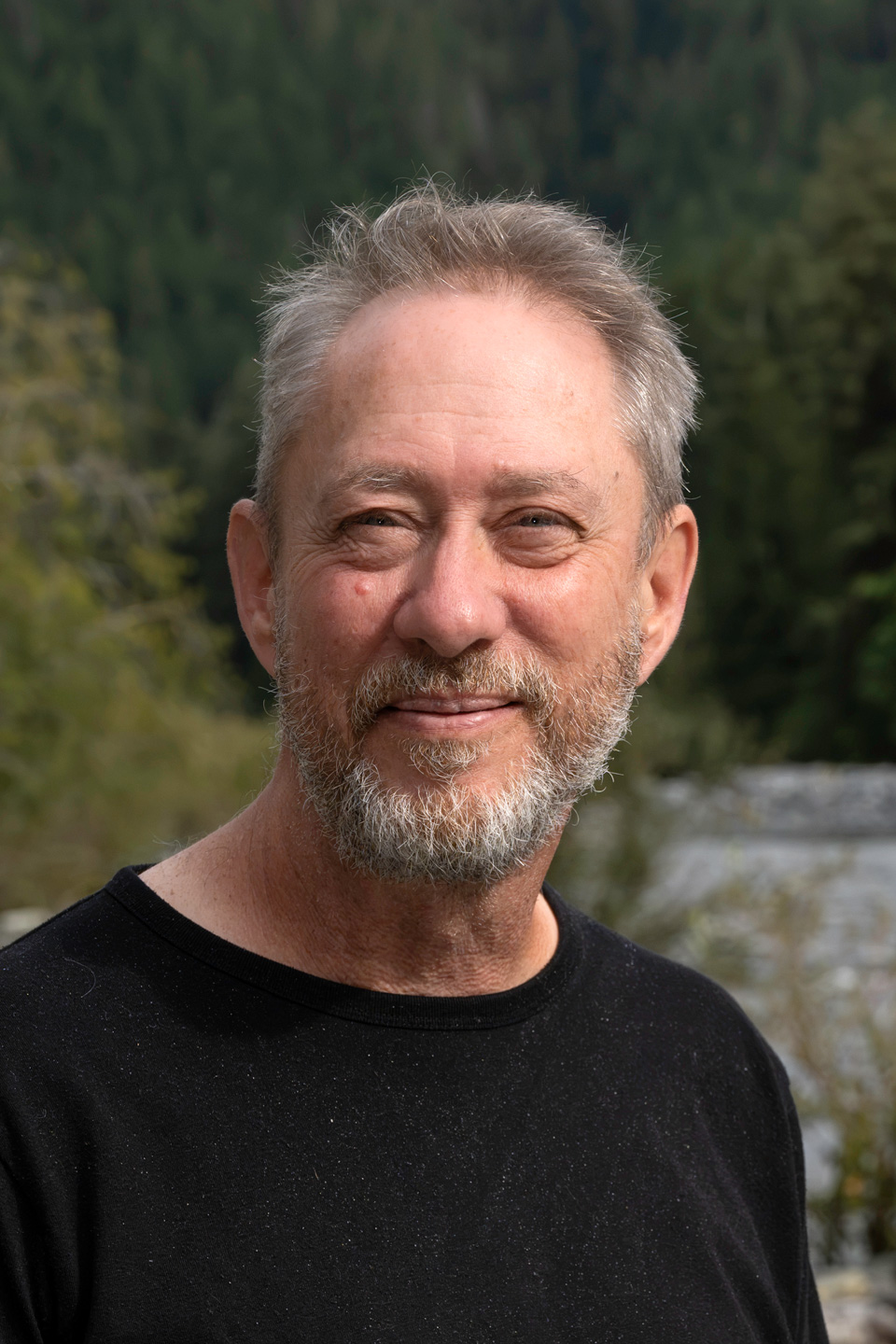
Eric lives in the territories of xʷməθkʷəy̓əm (Musqueam), Sḵwx̱wú7mesh (Squamish) and səlil̓wətaʔɬ (Tsleil-Waututh) Nations. As the general manager of the Salmon Parks Stewardship Society, he helps to implement the vision of the ha’wiih (hereditary leaders) of the Mowachaht/Muchalaht First Nation to protect and restore old growth salmon ecosystems in the hahuułi (chiefly territories).
With an M.A. in history from Queen’s University and a Ph.D. in fisheries from Simon Fraser University, Eric has devoted much of his adult life to working with and for First Nations across Canada. The last decade of serving the Nuu-chah-nulth Nations has instilled in him a deep respect for and commitment to the role he is privileged to play on behalf of communities that have lived on the land and water for thousands of years.
As a settler of mixed European ancestry, Eric has embraced his responsibility to embody iisaak — respect with care for all living and non-living things; to honour and hold up his teachers in the community; and to support the Indigenous stewards of land and water in their exercise of uu-a-thluk (caring for).
Eric and his partner Erin can be found walking, hiking and biking with their dog Lola on the streets and trails of the West End.
Eric lives in the territories of xʷməθkʷəy̓əm (Musqueam), Sḵwx̱wú7mesh (Squamish) and səlil̓wətaʔɬ (Tsleil-Waututh) Nations. As the general manager of the Salmon Parks Stewardship Society, he helps to implement the vision of the ha’wiih (hereditary leaders) of the Mowachaht/Muchalaht First Nation to protect and restore old growth salmon ecosystems in the hahuułi (chiefly territories).
With an M.A. in history from Queen’s University and a Ph.D. in fisheries from Simon Fraser University, Eric has devoted much of his adult life to working with and for First Nations across Canada. The last decade of serving the Nuu-chah-nulth Nations has instilled in him a deep respect for and commitment to the role he is privileged to play on behalf of communities that have lived on the land and water for thousands of years.
As a settler of mixed European ancestry, Eric has embraced his responsibility to embody iisaak — respect with care for all living and non-living things; to honour and hold up his teachers in the community; and to support the Indigenous stewards of land and water in their exercise of uu-a-thluk (caring for).
Eric and his partner Erin can be found walking, hiking and biking with their dog Lola on the streets and trails of the West End.
General Manager
Eric lives in the territories of xʷməθkʷəy̓əm (Musqueam), Sḵwx̱wú7mesh (Squamish)…
Eric lives in the territories of xʷməθkʷəy̓əm (Musqueam), Sḵwx̱wú7mesh (Squamish) and səlil̓wətaʔɬ (Tsleil-Waututh) Nations. As the general manager of the Salmon Parks Stewardship Society, he helps to implement the vision of the ha’wiih (hereditary leaders) of the Mowachaht/Muchalaht First Nation to protect and restore old growth salmon ecosystems in the hahuułi (chiefly territories).
With an M.A. in history from Queen’s University and a Ph.D. in fisheries from Simon Fraser University, Eric has devoted much of his adult life to working with and for First Nations across Canada. The last decade of serving the Nuu-chah-nulth Nations has instilled in him a deep respect for and commitment to the role he is privileged to play on behalf of communities that have lived on the land and water for thousands of years.
As a settler of mixed European ancestry, Eric has embraced his responsibility to embody iisaak — respect with care for all living and non-living things; to honour and hold up his teachers in the community; and to support the Indigenous stewards of land and water in their exercise of uu-a-thluk (caring for).
Eric and his partner Erin can be found walking, hiking and biking with their dog Lola on the streets and trails of the West End.
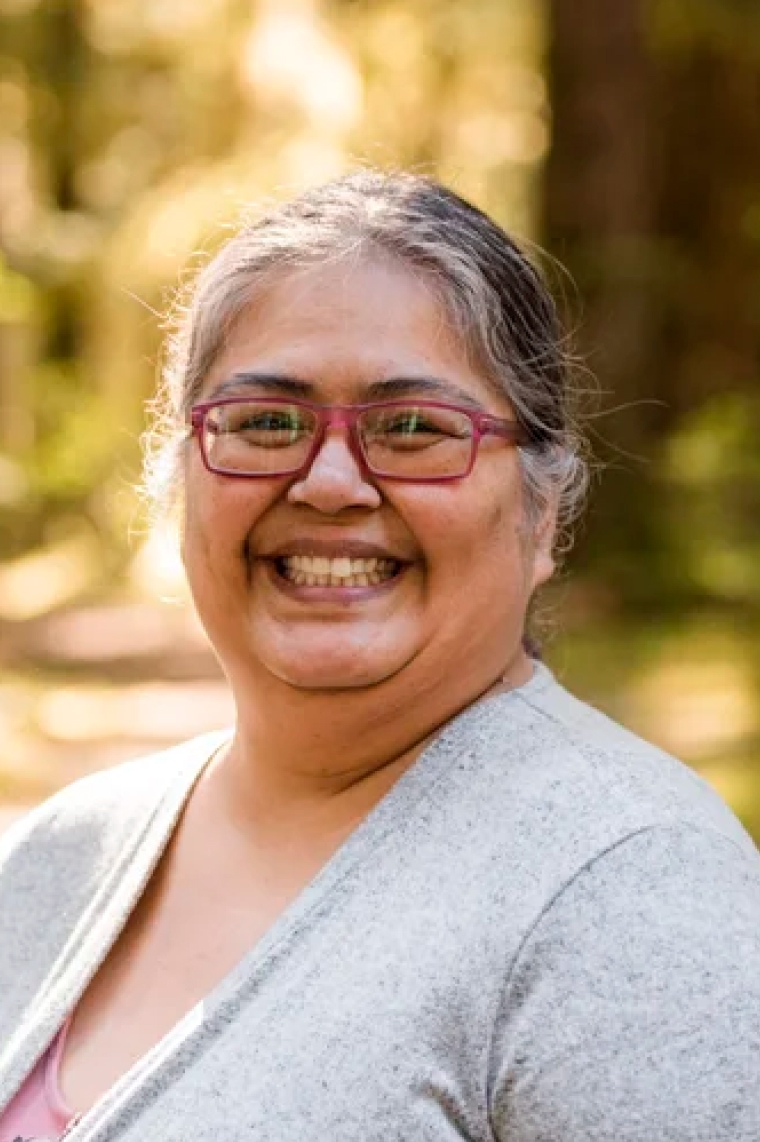
Marsha, also known by her traditional name, Yahlawa Aksa, lives in her hahuułi (chiefly territories) in Gold River and is the daughter of a Tseshaht mother and Mowachaht/Muchalaht father.
Marsha brings more than two decades of experience in the education system in School District 84, where she served as a liaison between the school and families, and taught Nuu-chah-nulth language, storytelling and arts.
As community engagement coordinator at Salmon Parks, Marsha engages Elders and community members, strengthening connections between them and amplifying their leadership role in the stewardship of their lands and waters through their stories of home, where they have, and continue to, fish, hunt and live in community.
Marsha has noticed the impact that unsustainable logging has had on her community and territory — from the giant trees of her childhood days to the much smaller trees on logging trucks today. She recognizes that our health and the health of our future generations depends on a balanced approach of taking from, and giving back to, the land and waters to keep them resilient, much like the resilient people of the nations who live in close connection to them.
Marsha lives with her two children and enjoys fishing during the spring season.
Marsha, also known by her traditional name, Yahlawa Aksa, lives in her hahuułi (chiefly territories) in Gold River and is the daughter of a Tseshaht mother and Mowachaht/Muchalaht father.
Marsha brings more than two decades of experience in the education system in School District 84, where she served as a liaison between the school and families, and taught Nuu-chah-nulth language, storytelling and arts.
As community engagement coordinator at Salmon Parks, Marsha engages Elders and community members, strengthening connections between them and amplifying their leadership role in the stewardship of their lands and waters through their stories of home, where they have, and continue to, fish, hunt and live in community.
Marsha has noticed the impact that unsustainable logging has had on her community and territory — from the giant trees of her childhood days to the much smaller trees on logging trucks today. She recognizes that our health and the health of our future generations depends on a balanced approach of taking from, and giving back to, the land and waters to keep them resilient, much like the resilient people of the nations who live in close connection to them.
Marsha lives with her two children and enjoys fishing during the spring season.
Assistant Manager and Community Engagement Coordinator
Marsha, also known by her traditional name, Yahlawa Aksa, lives in her hahuułi…
Marsha, also known by her traditional name, Yahlawa Aksa, lives in her hahuułi (chiefly territories) in Gold River and is the daughter of a Tseshaht mother and Mowachaht/Muchalaht father.
Marsha brings more than two decades of experience in the education system in School District 84, where she served as a liaison between the school and families, and taught Nuu-chah-nulth language, storytelling and arts.
As community engagement coordinator at Salmon Parks, Marsha engages Elders and community members, strengthening connections between them and amplifying their leadership role in the stewardship of their lands and waters through their stories of home, where they have, and continue to, fish, hunt and live in community.
Marsha has noticed the impact that unsustainable logging has had on her community and territory — from the giant trees of her childhood days to the much smaller trees on logging trucks today. She recognizes that our health and the health of our future generations depends on a balanced approach of taking from, and giving back to, the land and waters to keep them resilient, much like the resilient people of the nations who live in close connection to them.
Marsha lives with her two children and enjoys fishing during the spring season.
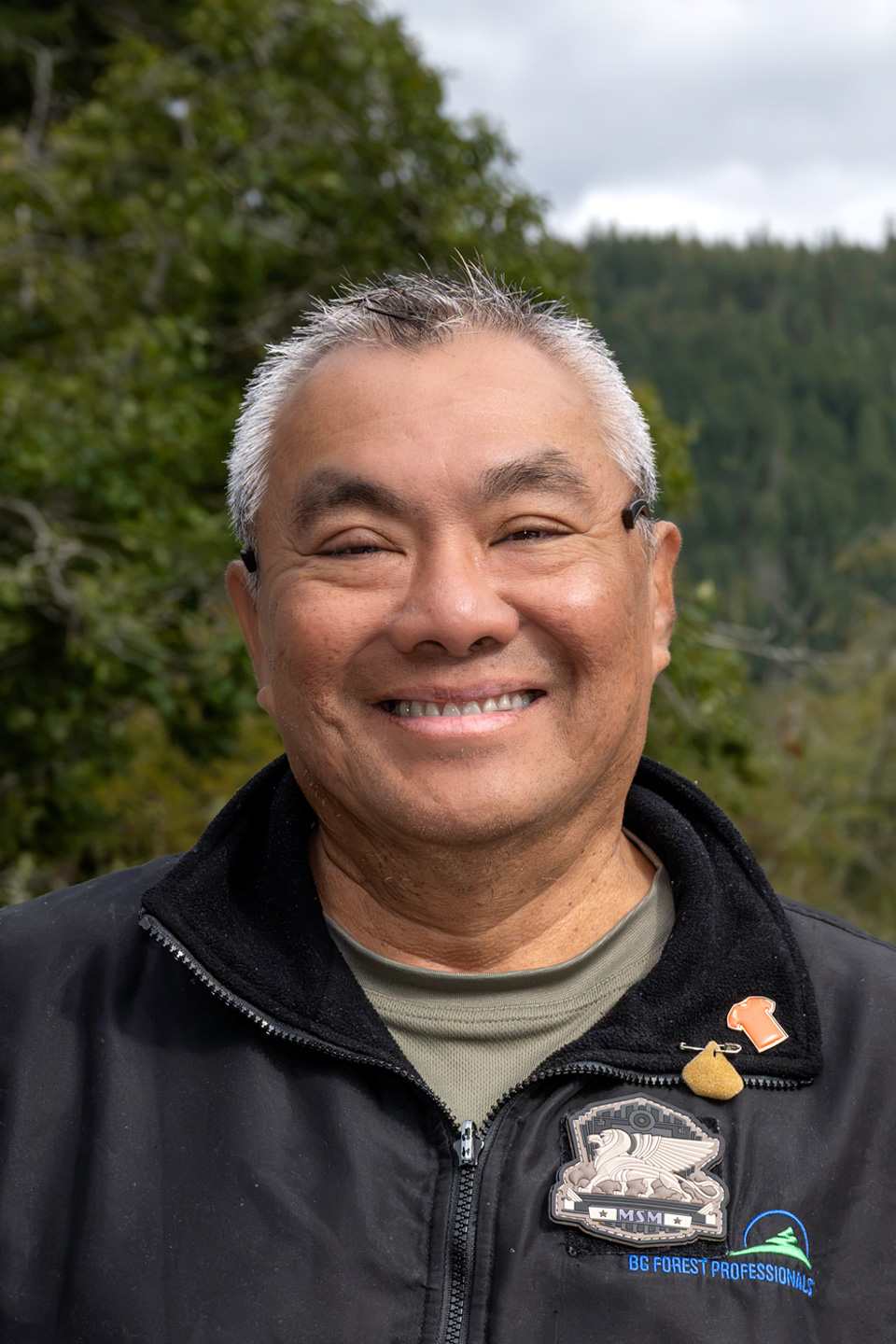
Wilson R. Low is a 1st generation immigrant from the Republic of Singapore. Wilson served for five and a half years as a commissioned officer with the Singapore Armed Forces’ Combat Engineers before immigrating to Canada in 1987 to pursue post-secondary studies. He became a Canadian citizen in 1994.
Wilson’s career has been shaped by two decades of agricultural and forestry work. He earned two degrees in Agriculture and Forest Business Management from the University of Alberta, and from 2000 to 2002 led the operational restoration of the Bowron Forest Watershed, on the traditional territory of the L’heidli T’enneh Nation. Working alongside Takla Nation and L’heidli T’enneh Elders and community members during that project helped to shape his understanding of how Indigenous voices and knowledge must be at the centre of land and water stewardship.
As a non-Indigenous settler, Wilson considers it a privilege to bring his 28 years of forestry and forest engineering experience to Salmon Parks, sharing that knowledge and collaborating with the Salmon Parks team in support of Mowachaht/Muchalaht First Nation’s stewardship work.
Outside of work, Wilson enjoys spending time with his partner Jacqueline exploring new restaurants, going for walks, and planning outings together. He is an avid fisherman, loves Quadding on his ATV and indulges in Alpine skiing.
Wilson R. Low is a 1st generation immigrant from the Republic of Singapore. Wilson served for five and a half years as an officer with the Singapore Armed Forces’ Combat Engineers before immigrating to Canada in 1987 to pursue post-secondary studies. He became a Canadian citizen in 1994.
Wilson’s career has been shaped by two decades of agricultural and forestry work. He earned two degrees in Agriculture and Forest Business Management from the University of Alberta, and from 2000 to 2002 led the operational restoration of the Bowron Forest Watershed, on the traditional territory of the L’heidli T’enneh Nation. Working alongside Takla Nation and L’heidli T’enneh Elders and community members during that project helped shape his understanding of how Indigenous voices and knowledge must be at the centre of land and water stewardship.
As a non-Indigenous settler, Wilson considers it a privilege to bring his 28 years of forestry and forest engineering experience to Salmon Parks, sharing that knowledge and collaborating with the Salmon Parks team in support of Mowachaht/Muchalaht First Nation’s stewardship work.
Outside of work, Wilson enjoys spending time with his partner Jacqueline exploring new restaurants, going for walks, and planning outings together.
Operations Manager
Wilson R. Low is a 1st generation immigrant from the Republic of Singapore. Wilson served…
Wilson R. Low is a 1st generation immigrant from the Republic of Singapore. Wilson served for five and a half years as an officer with the Singapore Armed Forces’ Combat Engineers before immigrating to Canada in 1987 to pursue post-secondary studies. He became a Canadian citizen in 1994.
Wilson’s career has been shaped by two decades of agricultural and forestry work. He earned two degrees in Agriculture and Forest Business Management from the University of Alberta, and from 2000 to 2002 led the operational restoration of the Bowron Forest Watershed, on the traditional territory of the L’heidli T’enneh Nation. Working alongside Takla Nation and L’heidli T’enneh Elders and community members during that project helped shape his understanding of how Indigenous voices and knowledge must be at the centre of land and water stewardship.
As a non-Indigenous settler, Wilson considers it a privilege to bring his 28 years of forestry and forest engineering experience to Salmon Parks, sharing that knowledge and collaborating with the Salmon Parks team in support of Mowachaht/Muchalaht First Nation’s stewardship work.
Outside of work, Wilson enjoys spending time with his partner Jacqueline exploring new restaurants, going for walks, and planning outings together.
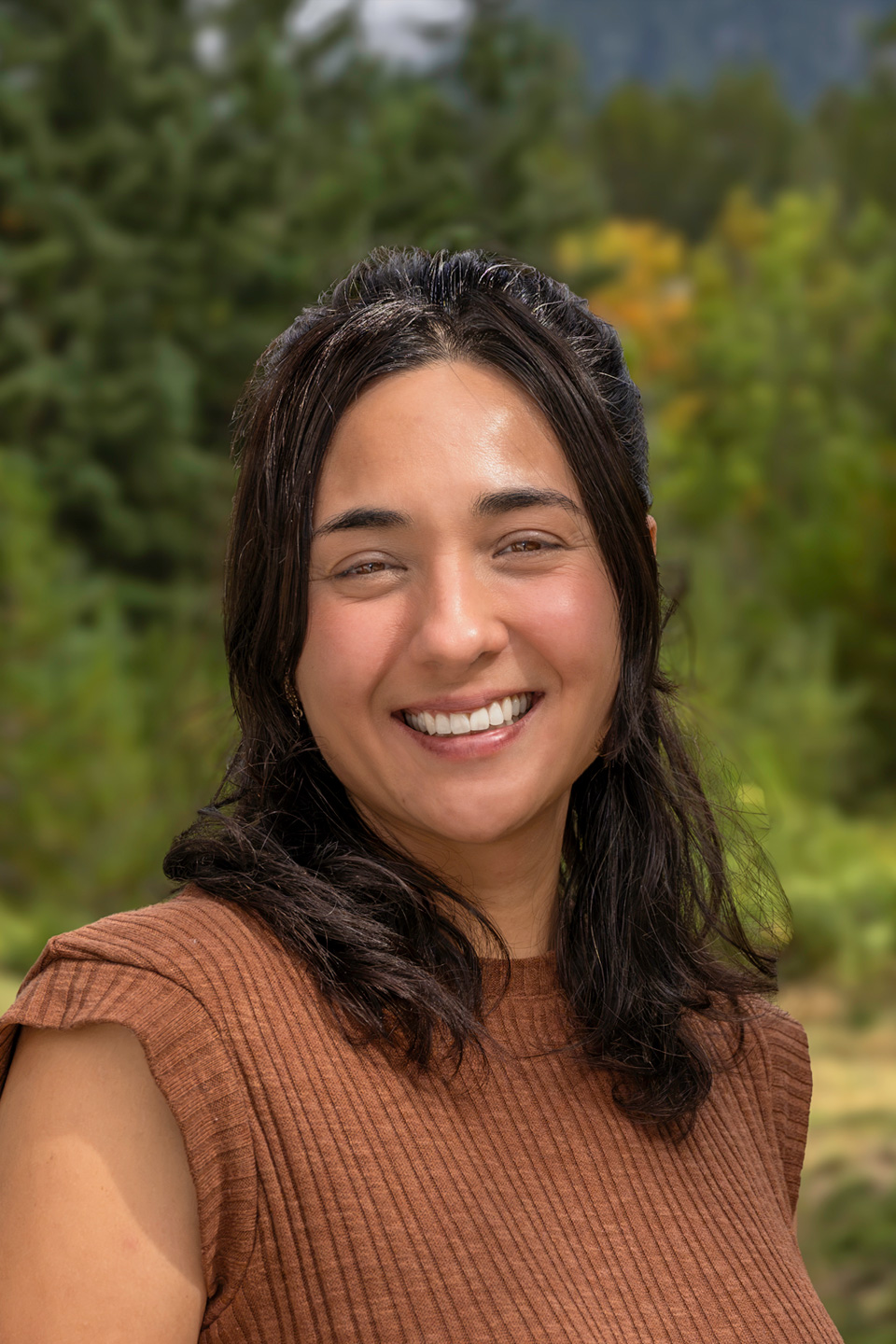
Robin (she/her) is of mixed European and Chinese ancestry and a grateful settler on the traditional territory of the Mowachaht/Muchalaht First Nation (MMFN) in Gold River.
Her interest in poetics and oral history sparked her pursuit of a B.A. in Literature at Simon Fraser University, and her experience in advocacy, working closely with communities, and connection to Indigenous culture guide her collaborative approach to working, learning and supporting Indigenous-led stewardship.
As the Revitalizing Indigenous Land, Air, and Water (RELAW) Coordinator with Salmon Parks and the Nation, Robin works with MMFN community members and partners to support Indigenous-led stewardship and the continuation of MMFN living law.
Robin enjoys seeing the world through the eyes of her young daughter and is a lifelong learner who cherishes her time in nature, and enjoys art, music, literature and staying curious and appreciative of the uniqueness in people and cultures.
Robin (she/her) is of mixed European and Chinese ancestry and a grateful settler on the traditional territory of the Mowachaht/Muchalaht First Nation (MMFN) in Gold River.
Her interest in poetics and oral history sparked her pursuit of a B.A. in Literature at Simon Fraser University, and her experience in advocacy, working closely with communities, and connection to Indigenous culture guide her collaborative approach to working, learning and supporting Indigenous-led stewardship.
As the Revitalizing Indigenous Land, Air, and Water (RELAW) Coordinator with Salmon Parks and the Nation, Robin works with MMFN community members and partners to support Indigenous-led stewardship and the continuation of MMFN living law.
Robin enjoys seeing the world through the eyes of her young daughter and is a lifelong learner who cherishes her time in nature, and enjoys art, music, literature and staying curious and appreciative of the uniqueness in people and cultures.
RELAW Coordinator
Robin (she/her) is of mixed European and Chinese ancestry and a grateful settler on the…
Robin (she/her) is of mixed European and Chinese ancestry and a grateful settler on the traditional territory of the Mowachaht/Muchalaht First Nation (MMFN) in Gold River.
Her interest in poetics and oral history sparked her pursuit of a B.A. in Literature at Simon Fraser University, and her experience in advocacy, working closely with communities, and connection to Indigenous culture guide her collaborative approach to working, learning and supporting Indigenous-led stewardship.
As the Revitalizing Indigenous Land, Air, and Water (RELAW) Coordinator with Salmon Parks and the Nation, Robin works with MMFN community members and partners to support Indigenous-led stewardship and the continuation of MMFN living law.
Robin enjoys seeing the world through the eyes of her young daughter and is a lifelong learner who cherishes her time in nature, and enjoys art, music, literature and staying curious and appreciative of the uniqueness in people and cultures.
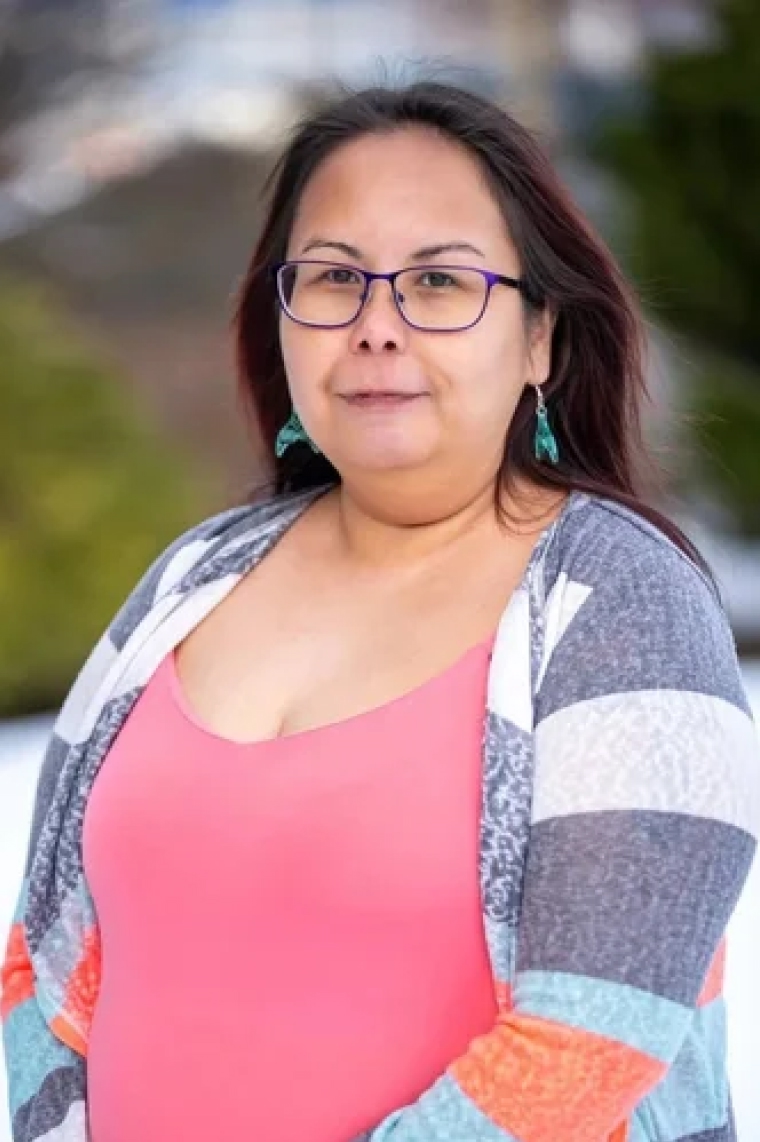
Mel was raised by her Mowachaht/Muchalaht mother and grandparents and has lived all her life in the ha-hahuułi (chiefly territories) in Gold River.
Before joining Salmon Parks as administrative assistant, Mel worked as receptionist at the Nuu-chah-nulth Tribal Council office. Mel sees parallels between her relationship to the land and water and her relationship to her grandmother, who is the oldest Elder in the Nation. Her grandmother raised her, took care of her and taught her life skills, and Mel considers it her honour and her duty to care for her now — much like the rivers, ocean and land that have provided for her community for hundreds of years and that now need our help and protection to continue to thrive.
Being involved in the work of Salmon Parks is deepening her understanding of the delicate balance between nature and human activity and the need for stewardship of the land and waters that we depend on.
Mel is a mother, stepmother and grandmother, who with her husband leads a busy life as a basketball mom and fosters her children’s connection to their roots through cultural activities, song and dance held a few times a week.
Mel was raised by her Mowachaht/Muchalaht mother and grandparents and has lived all her life in the ha-hahuułi (chiefly territories) in Gold River.
Before joining Salmon Parks as administrative assistant, Mel worked as receptionist at the Nuu-chah-nulth Tribal Council office. Mel sees parallels between her relationship to the land and water and her relationship to her grandmother, who is the oldest Elder in the Nation. Her grandmother raised her, took care of her and taught her life skills, and Mel considers it her honour and her duty to care for her now — much like the rivers, ocean and land that have provided for her community for hundreds of years and that now need our help and protection to continue to thrive.
Being involved in the work of Salmon Parks is deepening her understanding of the delicate balance between nature and human activity and the need for stewardship of the land and waters that we depend on.
Mel is a mother, stepmother and grandmother, who with her husband leads a busy life as a basketball mom and fosters her children’s connection to their roots through cultural activities, song and dance held a few times a week.
Administrative Assistant
Mel was raised by her Mowachaht/Muchalaht mother and grandparents and has lived all her…
Mel was raised by her Mowachaht/Muchalaht mother and grandparents and has lived all her life in the ha-hahuułi (chiefly territories) in Gold River.
Before joining Salmon Parks as administrative assistant, Mel worked as receptionist at the Nuu-chah-nulth Tribal Council office. Mel sees parallels between her relationship to the land and water and her relationship to her grandmother, who is the oldest Elder in the Nation. Her grandmother raised her, took care of her and taught her life skills, and Mel considers it her honour and her duty to care for her now — much like the rivers, ocean and land that have provided for her community for hundreds of years and that now need our help and protection to continue to thrive.
Being involved in the work of Salmon Parks is deepening her understanding of the delicate balance between nature and human activity and the need for stewardship of the land and waters that we depend on.
Mel is a mother, stepmother and grandmother, who with her husband leads a busy life as a basketball mom and fosters her children’s connection to their roots through cultural activities, song and dance held a few times a week.
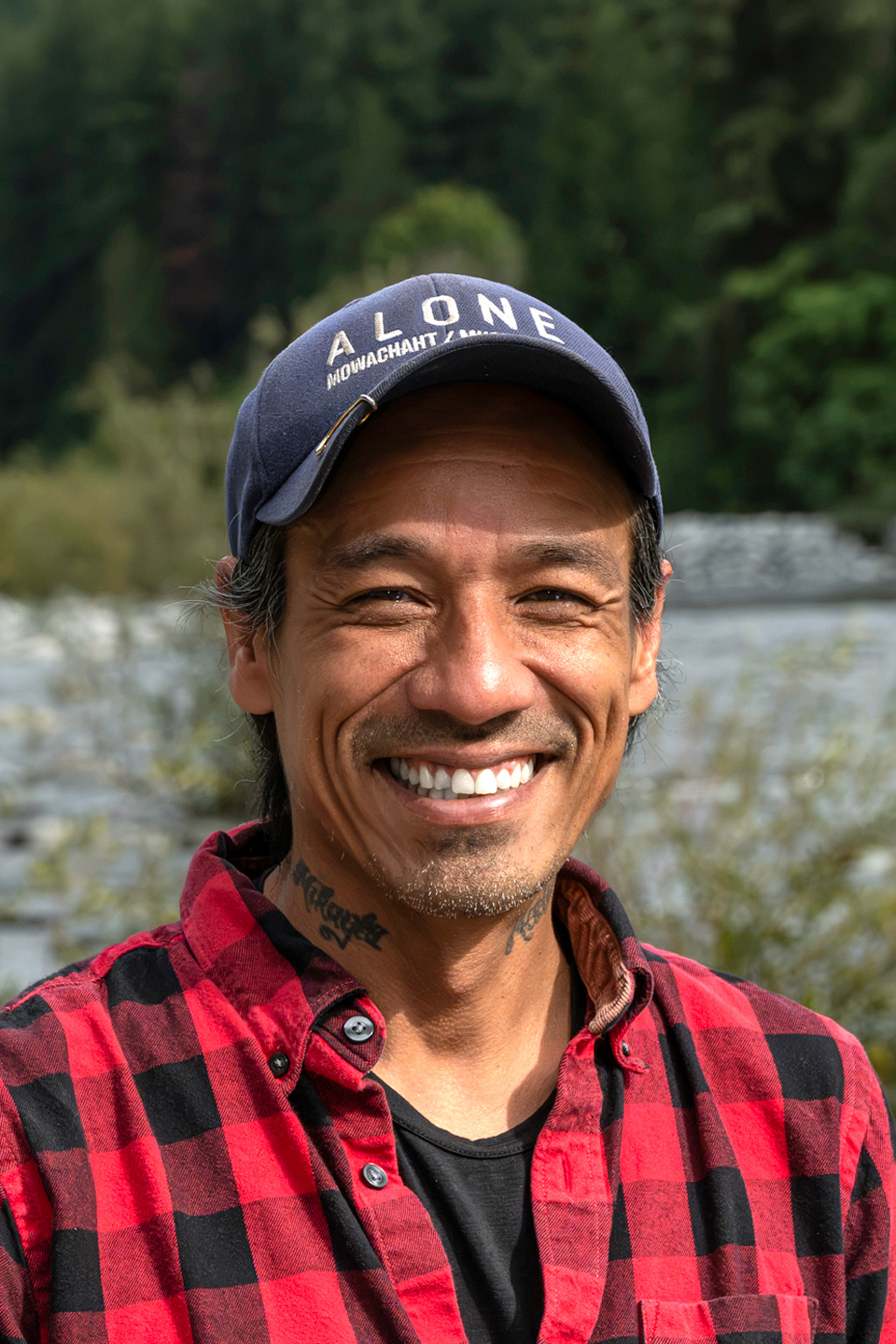
Jamie James was born to a mother from Coeur d’Alene, Idaho and a father from the Assiniboine Sioux Nation. He was adopted at age five by his Mowachaht/Muchalaht father and his wife and has since lived within the territories in Gold River.
After graduating high school, Jamie volunteered with his brother and eventually took over from him as a fisheries manager with MMFN. Jamie has had a varied career, working as a sawyer in a shingle mill, as a tree planter and spacer, taking coast guard training, and doing archaeology surveys of culturally modified trees.
Jamie knows the territories like the back of his hand and shares that knowledge as a member of the Community Advisory Group, educating people by engaging them in discussions about Indigenous ways of taking care of the land and resources and how to restore and revitalize them so they continue to nourish the people well into the future.
With gratitude towards the community that helped raise him, mentored him and taught him everything that makes him a knowledge keeper, Jamie sees his role as an advocate and amplifier of the voices of the Elders from the past and present, passing on the knowledge and involving everyone for the love of the land.
In his spare time Jamie enjoys competitive shooting, being in the outdoors and looking to top the once-in-a-lifetime experience of caring for Luna, the killer whale. He finds that the relationship with animals is an integral part of living within the territory, and important to understanding a healthy ecosystem.
Jamie James was born to a mother from Coeur d’Alene, Idaho and a father from the Assiniboine Sioux Nation. He was adopted at age five by his Mowachaht/Muchalaht father and his wife and has since lived within the territories in Gold River.
After graduating high school, Jamie volunteered with his brother and eventually took over from him as a fisheries manager with MMFN. Jamie has had a varied career, working as a sawyer in a shingle mill, as a tree planter and spacer, taking coast guard training, and doing archaeology surveys of culturally modified trees.
Jamie knows the territories like the back of his hand and shares that knowledge as a member of the Community Advisory Group, educating people by engaging them in discussions about Indigenous ways of taking care of the land and resources and how to restore and revitalize them so they continue to nourish the people well into the future.
With gratitude towards the community that helped raise him, mentored him and taught him everything that makes him a knowledge keeper, Jamie sees his role as an advocate and amplifier of the voices of the Elders from the past and present, passing on the knowledge and involving everyone for the love of the land.
In his spare time Jamie enjoys competitive shooting, being in the outdoors and looking to top the once-in-a-lifetime experience of caring for Luna, the killer whale. He finds that the relationship with animals is an integral part of living within the territory, and important to understanding a healthy ecosystem.
Senior Guardian
Jamie James was born to a mother from Coeur d’Alene, Idaho and father from Assiniboine…
Jamie James was born to a mother from Coeur d’Alene, Idaho and a father from the Assiniboine Sioux Nation. He was adopted at age five by his Mowachaht/Muchalaht father and his wife and has since lived within the territories in Gold River.
After graduating high school, Jamie volunteered with his brother and eventually took over from him as a fisheries manager with MMFN. Jamie has had a varied career, working as a sawyer in a shingle mill, as a tree planter and spacer, taking coast guard training, and doing archaeology surveys of culturally modified trees.
Jamie knows the territories like the back of his hand and shares that knowledge as a member of the Community Advisory Group, educating people by engaging them in discussions about Indigenous ways of taking care of the land and resources and how to restore and revitalize them so they continue to nourish the people well into the future.
With gratitude towards the community that helped raise him, mentored him and taught him everything that makes him a knowledge keeper, Jamie sees his role as an advocate and amplifier of the voices of the Elders from the past and present, passing on the knowledge and involving everyone for the love of the land.
In his spare time Jamie enjoys competitive shooting, being in the outdoors and looking to top the once-in-a-lifetime experience of caring for Luna, the killer whale. He finds that the relationship with animals is an integral part of living within the territory, and important to understanding a healthy ecosystem.
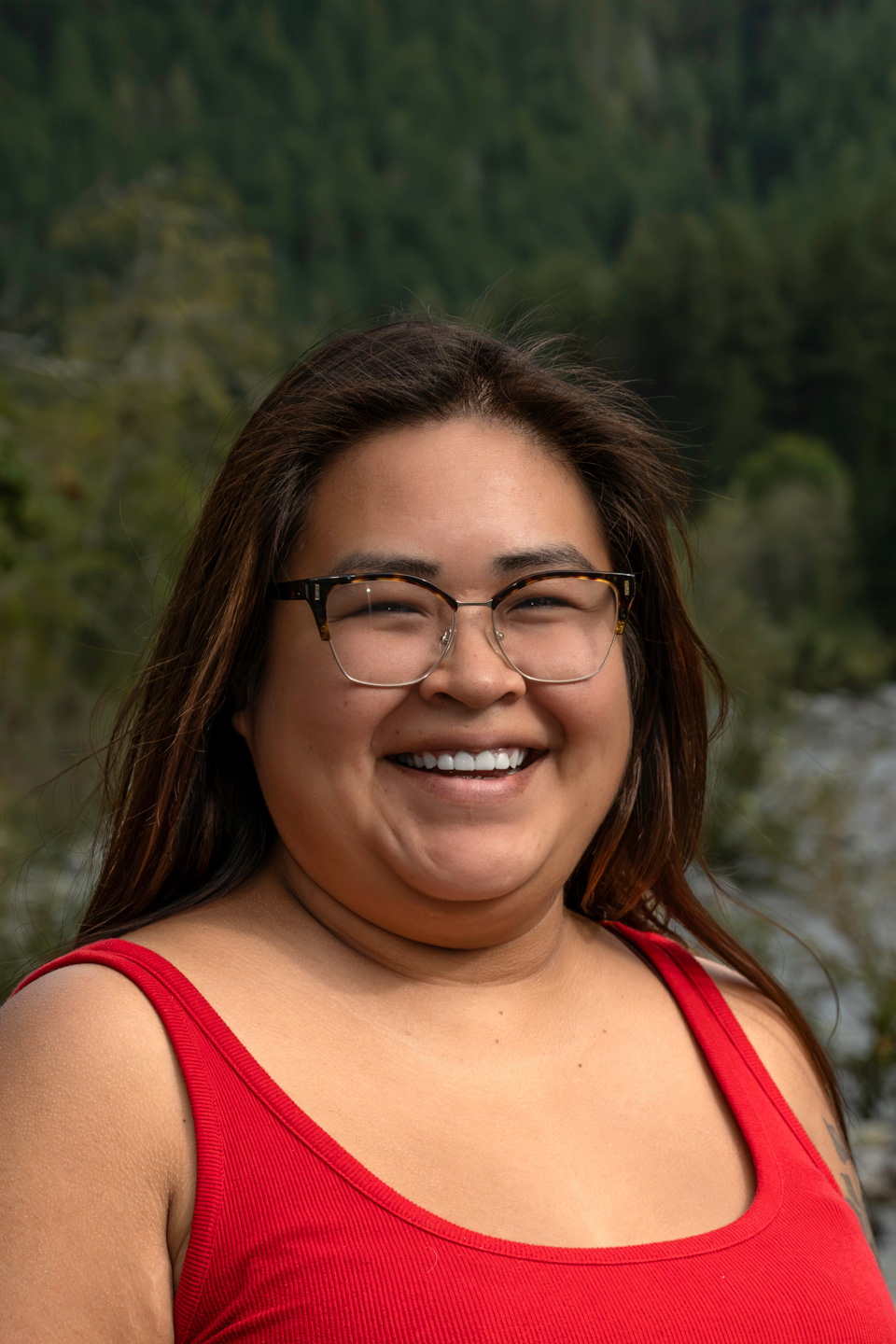
Bio coming shortly.
Junior Guardian
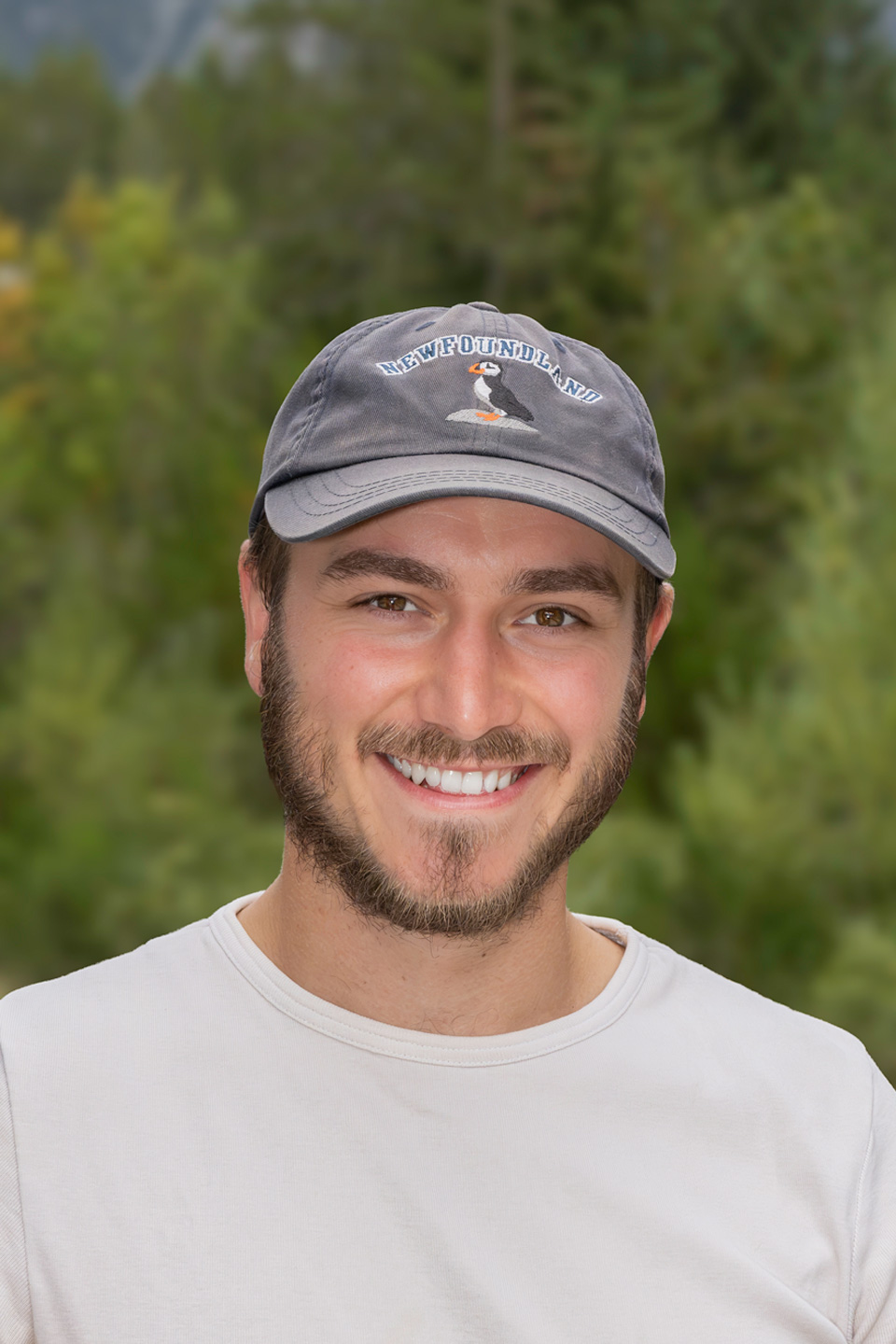
Thomas Barnes was born and raised in Belgium to a Belgian mother and an English father. Growing up bilingual in English and French, he attended an international European school where he developed a deep interest in geography and the natural world. That curiosity led him to Scotland, where he completed a Bachelor’s degree in Geography at Heriot-Watt University in Edinburgh, followed by a Master’s in Marine Ecology at the Vrije Universiteit Brussel, in Belgium.
Thomas’s academic and personal journey eventually brought him to Vancouver Island. Now based in Gold River, Thomas serves as a field technician with the Salmon Parks initiative, contributing his scientific training and environmental knowledge to support Indigenous-led stewardship. His work focuses on learning from Elders and community members to understand traditional ecological knowledge and apply it to modern conservation and restoration projects.
Through his experience, Thomas has come to appreciate the depth of cultural connection to the land and waters held by Indigenous Nations and the importance of collaboration, listening, and respect. He values the community-based approach of Salmon Parks, where decisions are made collectively, and everyone’s voice is heard.
Thomas enjoys cooking — especially cuisine from India — hiking the trails and making music. Having lived in cities across Europe, he now finds peace and purpose in the wilderness and community of Vancouver Island.
Thomas Barnes was born and raised in Belgium to a Belgian mother and an English father. Growing up bilingual in English and French, he attended an international European school where he developed a deep interest in geography and the natural world. That curiosity led him to Scotland, where he completed a Bachelor’s degree in Geography at Heriot-Watt University in Edinburgh, followed by a Master’s in Marine Ecology at the Vrije Universiteit Brussel, in Belgium.
Thomas’s academic and personal journey eventually brought him to Vancouver Island. Now based in Gold River, Thomas serves as a field technician with the Salmon Parks initiative, contributing his scientific training and environmental knowledge to support Indigenous-led stewardship. His work focuses on learning from Elders and community members to understand traditional ecological knowledge and apply it to modern conservation and restoration projects.
Through his experience, Thomas has come to appreciate the depth of cultural connection to the land and waters held by Indigenous Nations and the importance of collaboration, listening, and respect. He values the community-based approach of Salmon Parks, where decisions are made collectively, and everyone’s voice is heard.
Thomas enjoys cooking — especially cuisine from India — hiking the trails and making music. Having lived in cities across Europe, he now finds peace and purpose in the wilderness and community of Vancouver Island.
Technician
Thomas Barnes was born and raised in Belgium to a Belgian mother and an English father…
Thomas Barnes was born and raised in Belgium to a Belgian mother and an English father. Growing up bilingual in English and French, he attended an international European school where he developed a deep interest in geography and the natural world. That curiosity led him to Scotland, where he completed a Bachelor’s degree in Geography at Heriot-Watt University in Edinburgh, followed by a Master’s in Marine Ecology at the Vrije Universiteit Brussel, in Belgium.
Thomas’s academic and personal journey eventually brought him to Vancouver Island. Now based in Gold River, Thomas serves as a field technician with the Salmon Parks initiative, contributing his scientific training and environmental knowledge to support Indigenous-led stewardship. His work focuses on learning from Elders and community members to understand traditional ecological knowledge and apply it to modern conservation and restoration projects.
Through his experience, Thomas has come to appreciate the depth of cultural connection to the land and waters held by Indigenous Nations and the importance of collaboration, listening, and respect. He values the community-based approach of Salmon Parks, where decisions are made collectively, and everyone’s voice is heard.
Thomas enjoys cooking — especially cuisine from India — hiking the trails and making music. Having lived in cities across Europe, he now finds peace and purpose in the wilderness and community of Vancouver Island.
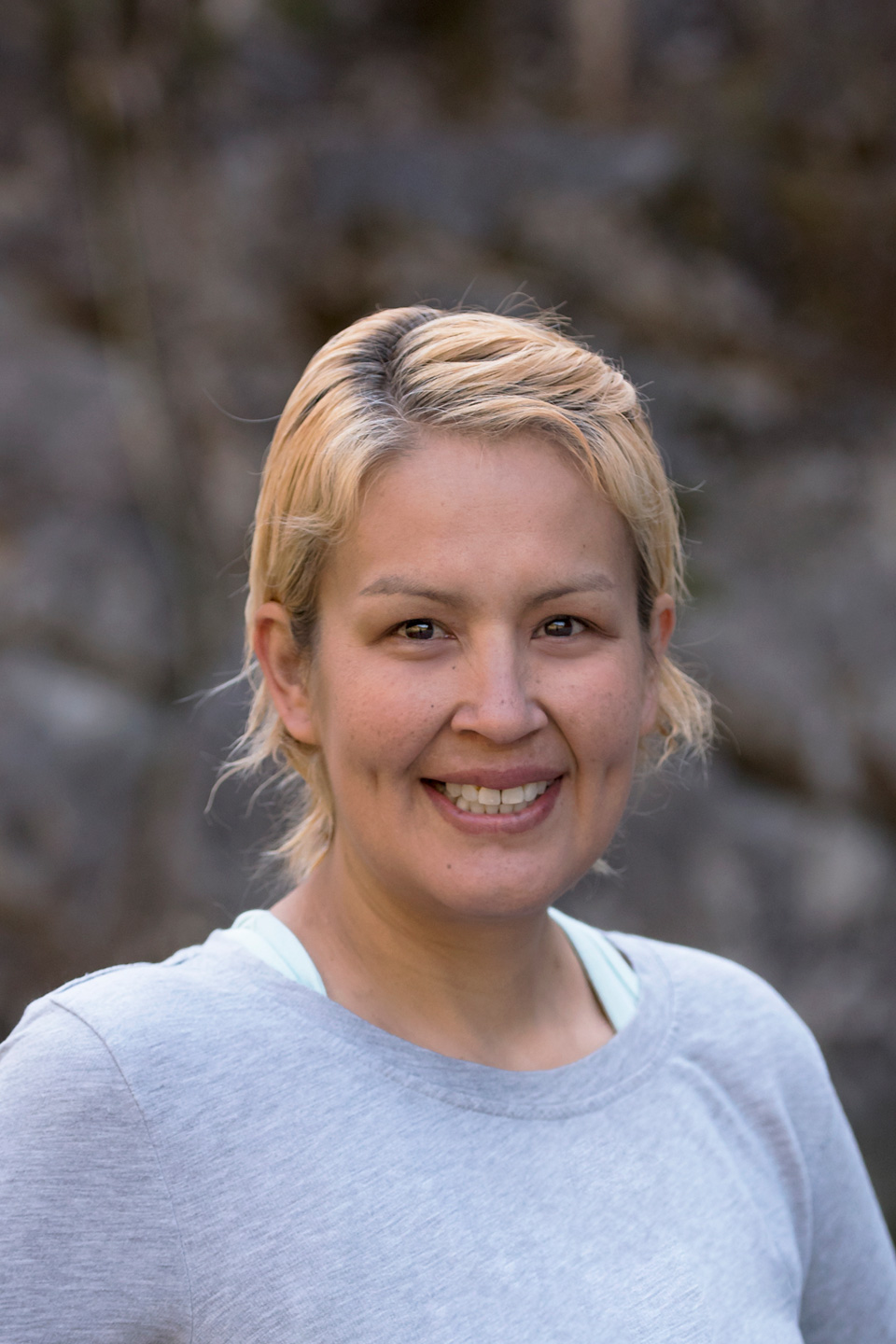
Born in Port Alberni to a mother from the Tseshaht Nation and a father from the Mowachaht/Muchalaht First Nation, Gloria is deeply connected to the lands and waters of her ancestors and lives in her hahuułi (chiefly territories) in Gold River.
For Gloria working with Salmon Parks is more than a job – it’s a natural extension of the way she has always lived and practices the teachings she carries with her. A lifelong lover of the wilderness, Gloria spent many childhood summers paddling in canoes as part of annual tribal quests, travelling by water visiting neighbouring communities. At the age of 14 she completed her first canoe journey, an experience that strengthened her connection to the land, water and teachings of her ancestors
Gloria believes that we are all stewards of Mother Nature. Doing our part by practicing moderation, and respecting the land, water, air and wildlife is our responsibility. It is through our everyday actions, choices and respect for the natural world we help protect what sustains us. What we do today shapes the health and beauty of Mother Nature for our future generations yet to come.
As a mother and grandmother Gloria carries this responsibility close to her heart, it’s not just for our children and grandchildren it’s for others around the world as well. She lives with her partner spends as much time as possible outdoors.
Born in Port Alberni to a mother from the Tseshaht Nation and a father from the Mowachaht/Muchalaht First Nation, Gloria is deeply connected to the lands and waters of her ancestors and lives in her hahuułi (chiefly territories) in Gold River.
For Gloria, working with Salmon Parks is more than a job — it’s a natural extension of the way she has always lived and the teachings she carries with her. A lifelong lover of the wilderness, Gloria spent many childhood summers paddling in canoes as part of annual tribal quests, travelling by water to visit neighbouring communities. At the age of 14 she completed her first canoe journey, an experience that strengthened her connection to the land, water and teachings of her ancestors.
Gloria believes that we are all stewards of Mother Nature. Doing our part by practicing moderation, and respecting the land, water, air and wildlife, is our responsibility. It is through our everyday actions, choices and respect for the natural world that we help protect what sustains us. What we do today shapes the health and beauty of Mother Nature for the future generations yet to come.
As a mother and grandmother, Gloria carries this responsibility close to her heart — not just for her children and grandchildren, but for others around the world as well. She lives with her partner and spends as much time as possible outdoors.
Field Technician
Born in Port Alberni to a mother from the Tseshaht Nation and a father from the Mowachaht/Muchalaht…
Born in Port Alberni to a mother from the Tseshaht Nation and a father from the Mowachaht/Muchalaht First Nation, Gloria is deeply connected to the lands and waters of her ancestors and lives in her hahuułi (chiefly territories) in Gold River.
For Gloria, working with Salmon Parks is more than a job — it’s a natural extension of the way she has always lived and the teachings she carries with her. A lifelong lover of the wilderness, Gloria spent many childhood summers paddling in canoes as part of annual tribal quests, travelling by water to visit neighbouring communities. At the age of 14 she completed her first canoe journey, an experience that strengthened her connection to the land, water and teachings of her ancestors.
Gloria believes that we are all stewards of Mother Nature. Doing our part by practicing moderation, and respecting the land, water, air and wildlife, is our responsibility. It is through our everyday actions, choices and respect for the natural world that we help protect what sustains us. What we do today shapes the health and beauty of Mother Nature for the future generations yet to come.
As a mother and grandmother, Gloria carries this responsibility close to her heart — not just for her children and grandchildren, but for others around the world as well. She lives with her partner and spends as much time as possible outdoors.
The Salmon Parks Community Advisory Group (CAG) provides input, guidance, and advice to the Salmon Parks team to ensure the work is in alignment with MMFN values, goals, and priorities.
Advising the Salmon Parks team on MMFN values, goals and priorities. Bio coming shortly.
Advising the Salmon Parks team on MMFN values, goals and priorities. Bio coming shortly.
Advising the Salmon Parks team on MMFN values, goals and priorities. Bio coming shortly.
Advising the Salmon Parks team on MMFN values, goals and priorities. Bio coming shortly.
Advising the Salmon Parks team on MMFN values, goals and priorities. Bio coming shortly.
Advising the Salmon Parks team on MMFN values, goals and priorities. Bio coming shortly.
Advising the Salmon Parks team on MMFN values, goals and priorities. Bio coming shortly.
Advising the Salmon Parks team on MMFN values, goals and priorities. Bio coming shortly.
Advising the Salmon Parks team on MMFN values, goals and priorities. Bio coming shortly.
Advising the Salmon Parks team on MMFN values, goals and priorities. Bio coming shortly.
Advising the Salmon Parks team on MMFN values, goals and priorities. Bio coming shortly.
